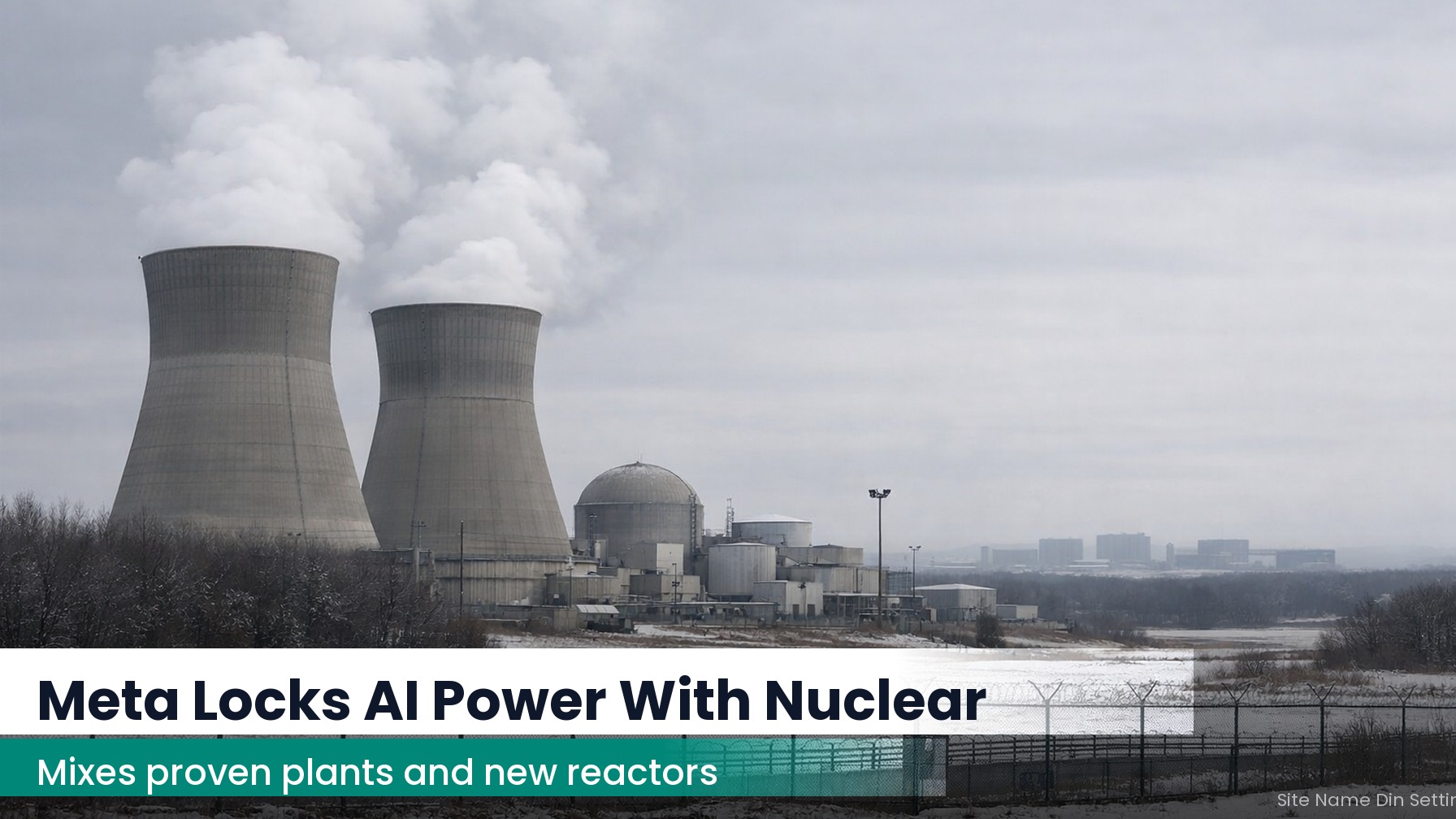
Meta signed agreements with Vistra, Oklo, and TerraPower to secure nuclear power for AI, CNBC reported. AI infrastructure power demand is outrunning grid procurement habits, forcing long-dated contracting tied to permitting and buildout timelines.
Meta is converting AI power demand into long dated nuclear supply by mixing proven plants with early stage reactors, shifting execution risk from electricity availability to permitting and buildout timelines.
Before these agreements, Big Tech data center growth leaned on grid purchases and renewable contracts. SMRs sat in development while corporate procurement stayed inside established interconnection and contracting paths. Meta previously announced a 20-year agreement with Constellation tied to Clinton beginning 2027. SMR advocates cite factory production and cost benefits, while critics cite scale and cost challenges.
There are no US SMRs in commercial operations yet, and new projects require permits. Oklo is pre-revenue and its reactor plans are pending Nuclear Regulatory Commission review and approval. NuScale and UAMPS terminated the CFPP on Nov. 8, 2023, showing viability can fail when offtake subscriptions thin. Financial Times notes Oklo lacks regulatory approval and experts call SMR commercialization complex and costly, per Financial Times. "Meta’s funding commitment in support of early procurement and development activity is a major step in moving advanced nuclear forward," said Jacob DeWitte, Co-founder and CEO at Oklo, according to Meta.
The deals address near term electricity needs through existing plants, while expansion relies on SMRs facing permitting and commercialization hurdles. Meta's 20-year PPAs buy time from Vistra plants in Ohio and Pennsylvania, as Oklo and TerraPower sit on approval paths. Prometheus targets 2026 in New Albany, Ohio, while Oklo targets around 2030 and TerraPower cites as early as 2032. Meta's 6.6 gigawatts by 2035 claim sits across operating units and projects under development. The prepay mechanism funds project certainty at Oklo, while licensing schedules still govern deployment pacing.
NuScale’s CFPP ended after subscription targets failed, while Meta is using long-dated contracts plus development funding. Vistra cites more than 2,600 megawatts from three plants, while Oklo targets up to 1.2 gigawatts in Ohio later. Meta also cites TerraPower power as early as 2032 plus rights for additional projects by 2035. Financial Times frames commercialization as costly and complex, while Meta frames procurement as an infrastructure input. Meta’s hybrid structure turns near-term availability into contracting, while the long-dated bottleneck concentrates in approvals and construction schedules.
Financial terms and pricing for the Meta agreements remain undisclosed. The exact volume Meta will draw from each counterparty over time stays unspecified. Dependency on projects under development constrains claims of delivered 6.6 gigawatts by 2035. Lack of US SMR operating history adds delivery risk alongside permitting and commercialization hurdles. The hybrid structure pulls near-term supply from operating units while pushing later capacity into licensing and construction schedules. How quickly NRC reviews clear and whether 2030 to 2035 targets hold will determine procurement outcomes across Vistra, Oklo, and TerraPower.