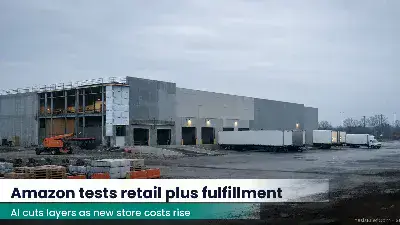
Amazon plans thousands more corporate job cuts next week, Reuters reported. AI infrastructure spending is outrunning cash generation, forcing valuation debates over free cash flow durability.
Amazon's reported new corporate job cuts look like a cash discipline signal as investors scrutinize AI-driven capex and free cash flow durability
Before this next round, Amazon had already cut about 14,000 corporate jobs. Large cap tech firms pair workforce reductions with heightened AI investment needs, preserving margins while capex rises. The company has a history of sharp stock drawdowns during major market downturns. The corporate job cuts are reported by sources and were not confirmed by Amazon.
Amazon is targeting about 30,000 corporate job reductions, with about 14,000 already cut in October. Forbes cites free cash flow of $14.8 billion over the last twelve months with rising property and equipment spending. Forbes says Amazon raised its 2025 capital expenditure forecast to $125 billion from $118 billion. Microsoft said it would cut about 6,000 jobs in May 2025, per Financial Times.
Planned layoffs fit a broader effort to protect margins and cash flow while capital spending and legal risks weigh on sentiment. Amazon’s 30,000 target meets a $125 billion 2025 capex figure amid $14.8 billion LTM free cash flow. NuScale and UAMPS ended CFPP in 2023, showing how viability can fail when offtake subscriptions thin. Walmart e-commerce growth plus Temu and Shein pressure adds margin tension beside opex actions. Amazon’s cost reset becomes a market variable while an FTC case heads toward 2026 trial.
Reported cuts beginning next week sit beside investor commentary expecting further capex increases in 2026. Workforce reductions as discipline messaging meets a valuation regime tied to free cash flow margins. Microsoft’s May 2025 restructuring framed efficiency while AI investment rose and shares were strong. Competitive pressure from Walmart, Temu, and Shein keeps operating leverage contested even with cuts. The second round shifts the investor question from intent to durability into 2026 debates.
Affected business units for the next round remain undisclosed. Exact roles and timing for the coming cuts stay unclear. Reported plans being unconfirmed constrains how investors model cost savings. Capex figures cited in investor commentary add uncertainty versus company guidance. The implication says a similarly sized reduction reinforces opex leverage defending free cash flow durability. How quickly capex guidance updates, and whether unconfirmed cuts match targets, will determine valuation framing into 2026 earnings debates.