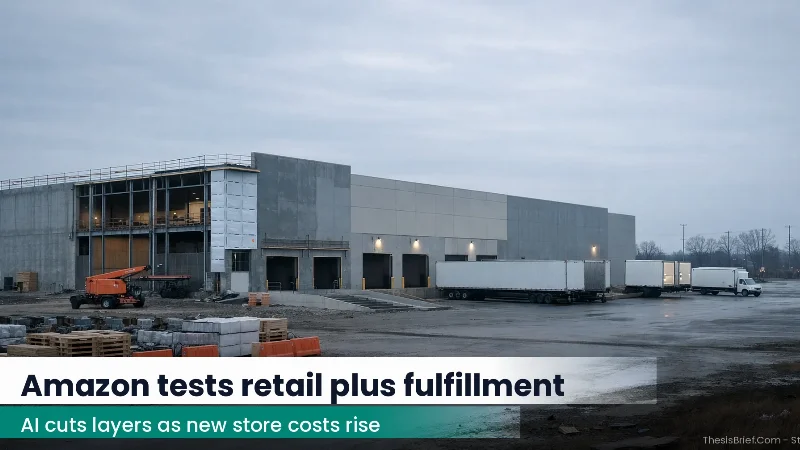
Amazon plans a 230,000 square foot mega-store outside Chicago combining shopping and fulfillment, Forbes reported. Big-box retail expansion is colliding with operating discipline, forcing execution across buildout risk and corporate headcount constraints.
Amazon is testing a capital-intensive store format that blends retail and fulfillment, while simultaneously signaling a leaner corporate structure that management links to AI-driven efficiency.
Before this concept, Amazon had struggled to find a consistent winning physical retail formula and had closed many branded stores. Large retailers have been using stores as fulfillment backbones to cut last mile cost. WSJ reported Amazon has closed dozens of branded stores and more than half of its Amazon Go convenience stores. Barron's reported Amazon previously cited an internal push to be more lean with fewer layers and more ownership.
Amazon is planning a large big-box store in Orland Park, Illinois, with a footprint around 230,000 square feet. The proposed store design allocates about half to customer shopping and about half to fulfillment. Amazon said the store targets groceries and household essentials in one trip, per GeekWire. "We’re convinced that we need to be organized more leanly, with fewer layers and more ownership." said Beth Galetti, Senior Vice President of People Experience and Technology at Amazon, according to About Amazon.
A shift toward hybrid physical retail formats arrives alongside reported headcount reductions that suggest tighter operating discipline. Target piloted a Minneapolis sortation center in 2020, showing how store nodes can route orders. Amazon’s half-fulfillment layout hardwires the store into delivery operations, not merchandising alone. A retail research note framed the format as a response to Walmart dominance. Barron's reported possible cuts of around 14,000 office jobs, citing Reuters and AI efficiency.
Target said it would invest $100 million to expand sortation to more than 15 sites by 2026. Target reported 26 million packages via sortation centers in 2022 and up to 40% next day Shipt orders. Amazon’s Orland Park design reserves major square footage for back-of-house support and tech ordering. The same coverage framed a physical moat as necessary because many Amazon shoppers still buy at Walmart. Forbes reported Amazon has a small share of US grocery and is attempting to compete more directly.
Amazon has not publicly named the new store concept or provided unit economics. Whether Amazon will replicate the model widely or treat it as a single market test remains unclear. Reported layoffs timing, scope, and affected units stay unconfirmed by Amazon. How much fulfillment serves same-day grocery versus general merchandise remains unclear. Cannot say layoffs are confirmed by Amazon based on these sources. Cannot claim the big-box strategy will succeed or materially change grocery market share. If the Orland Park concept proves workable, it sets up store-as-fulfillment-node competition with Walmart and Target. How unit economics emerge and whether workforce reductions proceed will determine expansion pacing and the same-day pickup and delivery capacity question.