Tesla is set to restart its AI supercomputer project, Reuters reported. Policy openings are colliding with internal buildout risk, forcing execution to match regulatory schedules and compute deployment pacing.
Tesla is trying to widen its advantage by pairing policy-enabled manufacturing flexibility with a renewed push for proprietary AI compute that supports autonomy and robotics.
Before Canada’s policy reset, 100% tariffs pushed Canada supply to the US and Berlin. When tariffs threaten cross border EV economics, automakers often re site production nearer end markets. Tesla’s Shanghai plant is described as its biggest and most cost efficient factory globally. Some Model 3 variants are mostly built in China, according to Reuters.
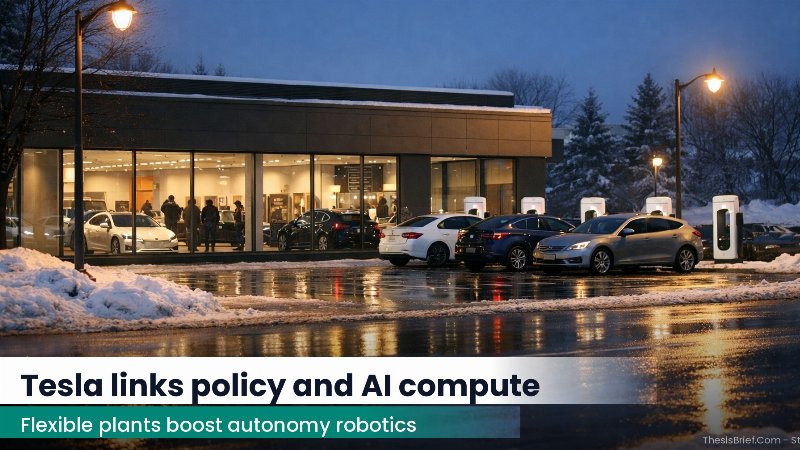
The United States imposed 100% tariffs on Chinese EVs in 2024, largely blocking imports. Canada will allow up to 49,000 China made vehicles annually at 6.1% tariffs. Half of the Canadian quota is reserved for vehicles under 35,000 Canadian dollars. The company has 39 stores in Canada, while BYD and Nio lack comparable presence. "Now that the AI5 chip design is in good shape, Tesla will restart work on Dojo3," said Elon Musk, CEO at Tesla, according to Barron's.
A policy change expands export options while Tesla shifts back toward heavier internal AI infrastructure investment, echoing tariff driven re siting patterns. The Volvo shift toward Belgium, per Yahoo Finance, shows how tariffs can force footprint duplication to protect volumes. Consultant flexibility claims about selling cars from any country collide with Canada’s under 35,000 dollar reservation. Tesla’s Canada specific Shanghai Model Y history sits beside a restarted compute agenda tied to autonomy. Route optionality across Shanghai, US, and Berlin becomes a lever while internal compute resourcing remains the gating input.
Tesla stopped Canada shipments from Shanghai after the 100% tariff, then relied on US and Berlin supply. Canada’s 6.1% channel expands sourcing choice while price reservations may narrow which configurations fit. Rivals without Canadian stores gain quota access while Tesla’s retail footprint changes the launch sequence. The Dojo3 restart signals vertical integration in training and inference compute while tariffs shift manufacturing footprints. Strategic implications frame route optionality and compute ownership as parallel defenses if vehicle competition intensifies.
Whether Tesla will resume shipping China built vehicles to Canada remains undisclosed. The AI supercomputer project size, budget, and schedule remain unclear. The under 35,000 Canadian dollar reservation administration constrains participation assumptions. Unconfirmed supply chain or chip foundry partners add execution risk for AI chip ambitions. Limits block claims of margin, delivery, or valuation impacts without financial disclosures. How Canada quota rules and Dojo3 resourcing align will determine whether route optionality and proprietary compute remain the variables governing differentiation.