Tesla outlined over $20 billion of 2026 capital spending as energy storage deployments hit records, TechCrunch wrote. AI infrastructure ambition is colliding with internal cash generation, forcing funding choices under related party governance screens.
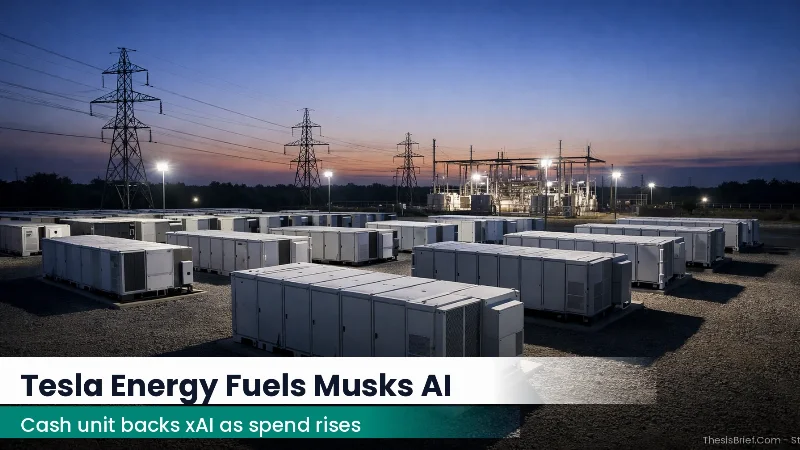
Tesla's energy unit is becoming both a cash generator and a strategic enabler for Musk's AI push, which raises related-party and funding questions as spending accelerates.
Before the shift, Tesla relied mainly on auto sales for cash generation while energy was a smaller contributor. Musk-linked transactions have triggered fiduciary duty litigation, with courts scrutinizing process and pricing under entire fairness. Tesla’s 2016 SolarCity acquisition reached a Delaware Supreme Court decision on June 6, 2023. The court upheld dismissal of shareholder claims, finding the acquisition entirely fair to shareholders.
Policy changes reduced tax credits for residential storage while commercial credits continue through mid-2030s. Tesla warned tariffs and legislation provisions could raise battery cell costs. xAI data center activity has drawn scrutiny related to turbine emissions and permitting. BNP Paribas framed the planned 2026 capex as cash burn pressure that could require capital, TheStreet recounted. Inside an FY2025 Form 10-K disclosure, Tesla told SEC EDGAR, "Tesla’s investment was made on market terms consistent with those already received by other investors in the financing" as governance framing for xAI ties.
Rising AI and infrastructure ambitions drive higher capex, while the energy business offsets profitability pressure via hardware sales. Musk-linked deals show how pricing process can face years of litigation scrutiny, even after outcomes favor defendants. Funding pressure framing collides with Tesla’s disclosure that energy storage is now a larger gross profit contributor. Another collision sits in Tesla’s stated role as a supplier to xAI projects alongside a separate equity check. Tesla’s planned 2026 buildout turns segment profit into a governance question set.
Courts’ entire fairness focus keeps attention on process and pricing, while the company disclosed $430 million Megapack sales to xAI. Analysts’ cash burn warning sits next to Tesla’s 29.8% energy gross margin, higher than the auto margin described. Higher capex needs collide with Tesla’s $2 billion investment in xAI and its related party transactions policy review. Policy support for commercial credits through the mid 2030s sits beside tariff driven battery cell cost risk. The energy unit’s infrastructure supplier role raises leverage while increasing governance scrutiny over AI stack funding paths.
Pricing and profitability of Megapack sales to xAI remain undisclosed. How Tesla will fund capex if free cash flow turns negative stays unclear. Cannot claim improper related party dealings without legal findings. Cannot quantify how much energy profits will fund AI spending without segment cash flow disclosure. The disclosed $430 million Megapack revenue, $285 million cost, and $2 billion xAI stake weld energy margins to AI buildout optics. Whether market rate terms, storage price pressure, and investigation outcomes converge will determine how 2026 spending is financed and judged.