Tesla stopped including Autosteer on new US and Canada vehicles, Reuters reported. Autonomy revenue pressure is colliding with safety marketing scrutiny, forcing a packaging shift into paid tiers.
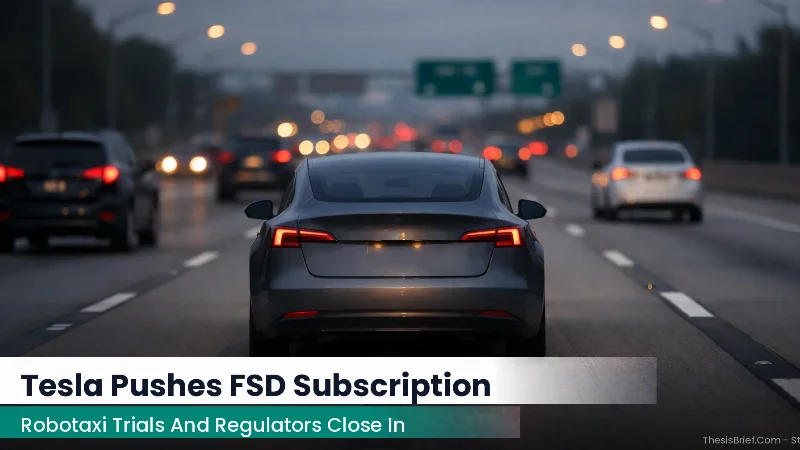
Tesla is trying to convert autonomy hype into recurring revenue by forcing more drivers into FSD subscriptions, while regulatory pressure and real-world robotaxi trials tighten the margin for messaging errors.
Before this change, Tesla bundled Autosteer within Autopilot as a standard feature and also sold Enhanced Autopilot and one-time FSD purchases. When driver assistance was layered, customers could stay on basic lane centering without committing to FSD payments. TechCrunch reported a California DMV process that could affect Tesla licenses and referenced a court finding of deceptive marketing tied to Autopilot and FSD claims. Reuters reported investors have focused on Tesla autonomy efforts as EV sales soften.
Reuters reported Tesla previously disclosed that 12% of customers had paid for FSD software. Tesla removed Autosteer from standard features on new vehicles in the US and Canada. Tesla stopped offering Autopilot and Enhanced Autopilot for new purchases and points buyers to the $99 per month FSD subscription. California’s DMV adopted an ALJ decision finding Tesla’s use of “autopilot” misleading, per California DMV. "I should also mention that the $99/month for supervised FSD will rise as FSD's capabilities improve" said Elon Musk, CEO at Tesla, according to Business Insider.
Regulatory challenges to Autopilot marketing and the need for autonomy revenue help explain a shift toward a single paid FSD tier, while Tesla removes Autosteer as a default. When regulators conclude automation programs pose an unreasonable risk, they can suspend permits quickly, forcing abrupt operational pauses and trust rebuilding. Cruise had its California driverless permits suspended effective October 24, 2023, and paused San Francisco operations the same day. New buyers get only Traffic Aware Cruise Control, while higher capability requires the monthly FSD subscription and robotaxi pilots include some unsupervised vehicles in Austin. Power sentence: Tesla sells $99 per month supervision while Austin runs some rides without monitors.
Tesla said it will stop offering FSD as a one-time $8,000 purchase starting February 14, while Musk talks about rising subscription pricing. The California DMV 60 day compliance window raises the strategic cost of feature naming while the paid tier becomes the upgrade path. CNBC reported Tesla began running a small number of robotaxis in Austin without a safety monitor in the car, while FSD remains supervised on consumer cars. Reuters reported Lemonade will offer a 50% rate cut for miles driven when FSD is steering, using Tesla telemetry data. That pricing structure relies on separating supervised miles from human miles, while regulators examine marketing language.
Whether current Tesla owners will see any feature changes or only new buyers are affected remains unclear. Whether Tesla will rename features to satisfy California DMV conditions stays unclear. Cannot state Tesla changed features solely because of California regulators unless explicitly confirmed. Cannot project subscription adoption or revenue impact without company figures. By removing the middle Autosteer lane and making paid FSD the upgrade path, the company concentrates risk on one autonomy brand. How quickly Tesla will scale unsupervised robotaxi operations and whether California naming compliance avoids license suspension remain open variables shaping subscription positioning.