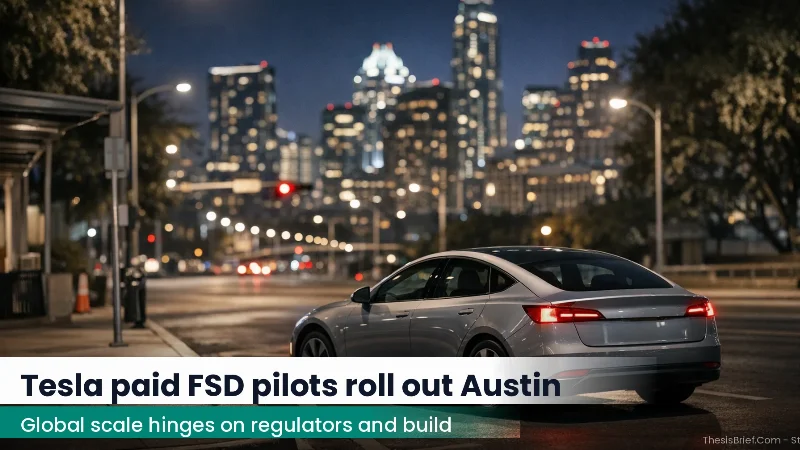
Tesla began offering robotaxi rides in Austin without in-car safety monitors on Thursday, Reuters reported. Autonomy demand is colliding with approval processes, forcing regulatory schedules and production ramp constraints.
Tesla is converting autonomy talk into a limited paid deployment in Austin, but global scale depends on regulators and manufacturing execution across FSD, Cybercab, and Optimus.
Before this shift, Tesla offered limited ride-hailing with employee supervision and faced skepticism after repeatedly missed robotaxi timelines. Even after commercial rollout begins, regulators can rapidly suspend driverless permissions after safety concerns, delaying scaling. FSD is an advanced driver assistance feature that requires driver attention and has faced regulatory scrutiny. Tesla reported slowing vehicle momentum with a second consecutive annual deliveries decline in 2025.
It also lost the top EV maker position to BYD, tightening pressure on software and service narratives. Waymo, ApolloGo, and Zoox compete in robotaxi services, and surveys show skepticism about robotaxi safety. Cruise lost California driverless permits on Oct. 24, 2023, showing how deployment can stop abruptly when regulators intervene. The board chair floated a steering wheel compromise as exemptions could cap Cybercab output, per The Verge. "Just started Tesla Robotaxi drives in Austin with no safety monitor in the car. Congrats to the Tesla AI team!", said Elon Musk, CEO at Tesla, according to TechCrunch.
A local unsupervised rollout advances the autonomy narrative, while approvals and ramp constraints cap expansion. The mixed Austin fleet with supervisors, alongside missed targets, keeps execution tied to safety oversight. Tesla’s Austin service is a product, but California permits are the operating boundary. Denholm’s steering wheel concession intersects with exemption caps, turning design into supply limitations. Musk’s expectation of Europe and China approvals next month collides with FSD’s driver attention classification.
Cruise’s 2023 suspension shows scaling can pause even when supervised testing continues elsewhere. Consumer skepticism sits beside Waymo and ApolloGo progress, while Tesla discloses limited operational detail. The Austin mix of unsupervised and supervised cars collides with a by end of 2026 US network claim. Cybercab’s slow initial ramp framing collides with the need for robotaxi capable vehicle supply. Optimus consumer sales by end of 2027 require late 2026 production, adding another ramp.
How many vehicles are operating fully unsupervised in Austin remains undisclosed. Accident and disengagement metrics for Austin also remain unclear. Permits and scope constrain any claim of nationwide driverless operation. Production ramp constraints add delivery risk across Cybercab and Optimus targets. The mixed fleet approach emphasizes city by city safety operations playbooks and robotaxi supply expansion. How quickly regulators approve FSD and whether Cybercab supply ramps remain open variables shaping service rollout through 2026.